Food Resources Chatbot
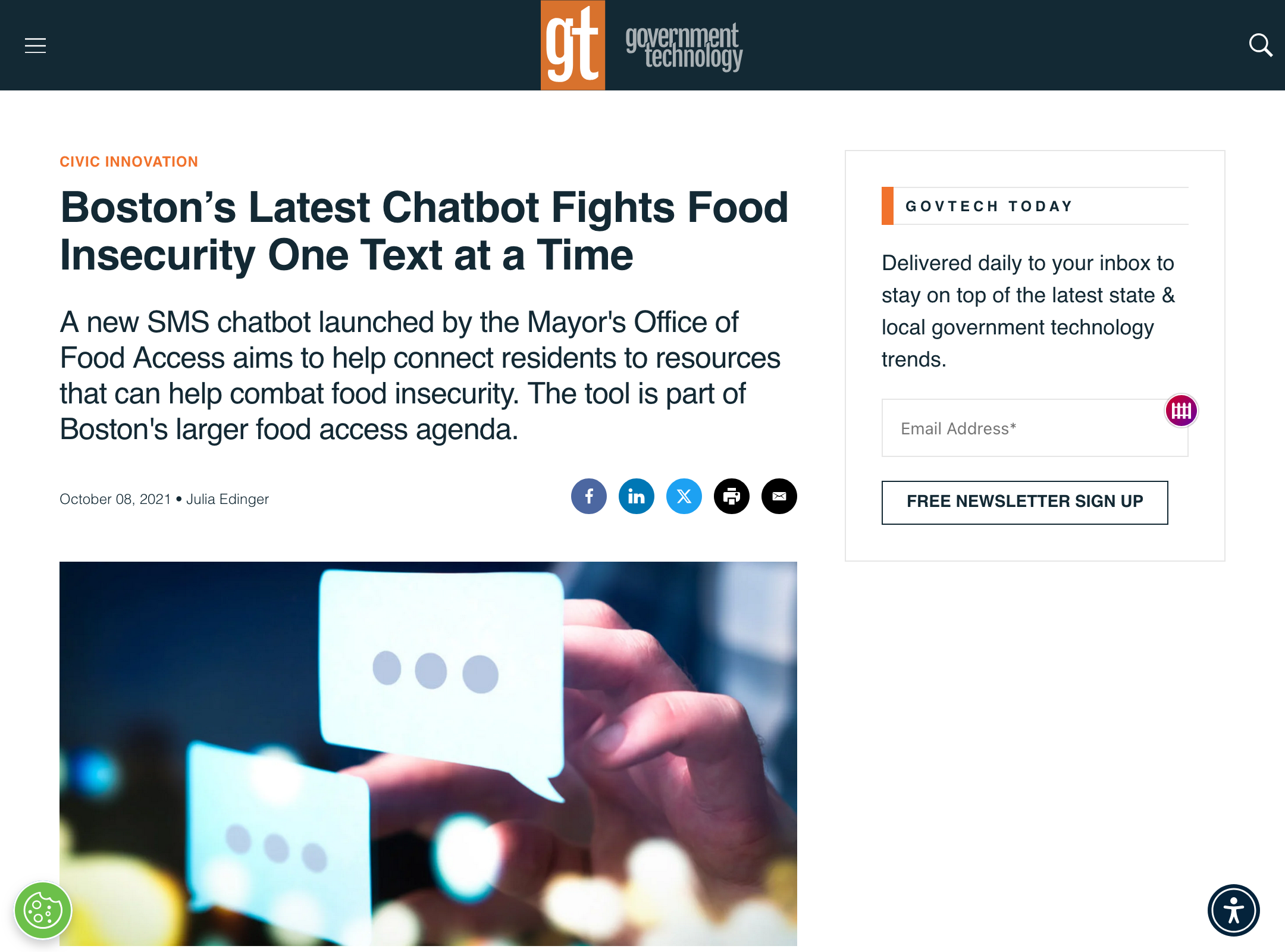
Residents of Boston can text ‘FOOD", "COMIDA", "食物", or keywords in five other languages to 617-579-8238 to learn about their public benefits or find where to get free or low-cost food for pickup or delivery.
The chatbot can serve more people because it is easy to use, low cost, available anytime, and doesn't require an Internet connection. In doing so, it also increases the Office of Food Access's outreach and staff capacity.

Challenge
PROBLEM
How might the City of Boston's expand public outreach about safety net programs and resources to address post-pandemic hunger?
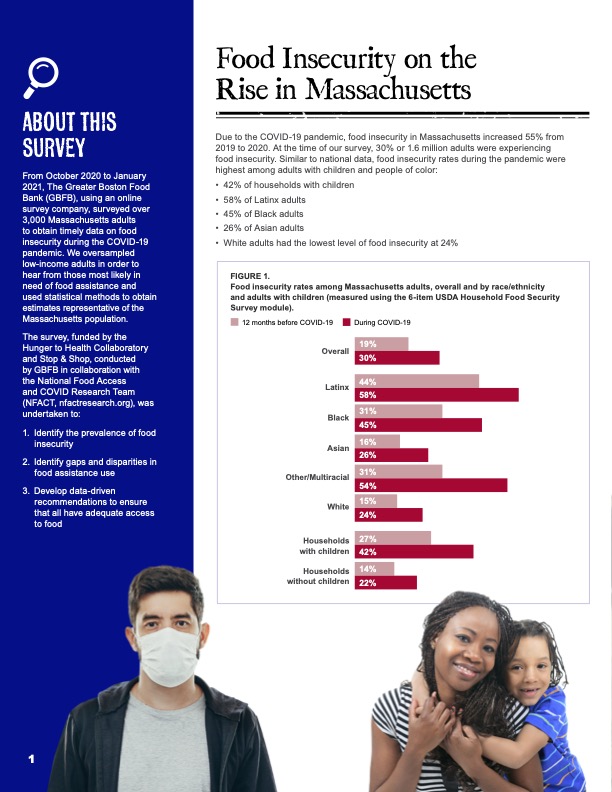
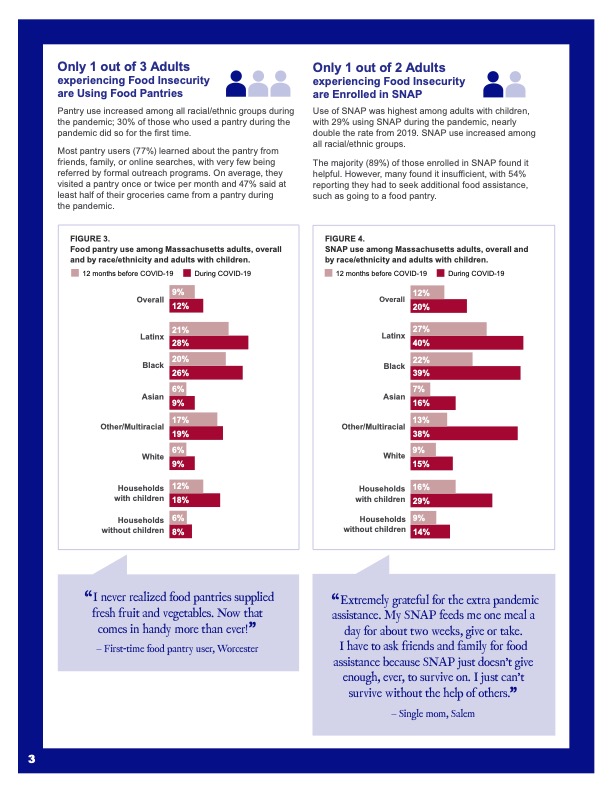
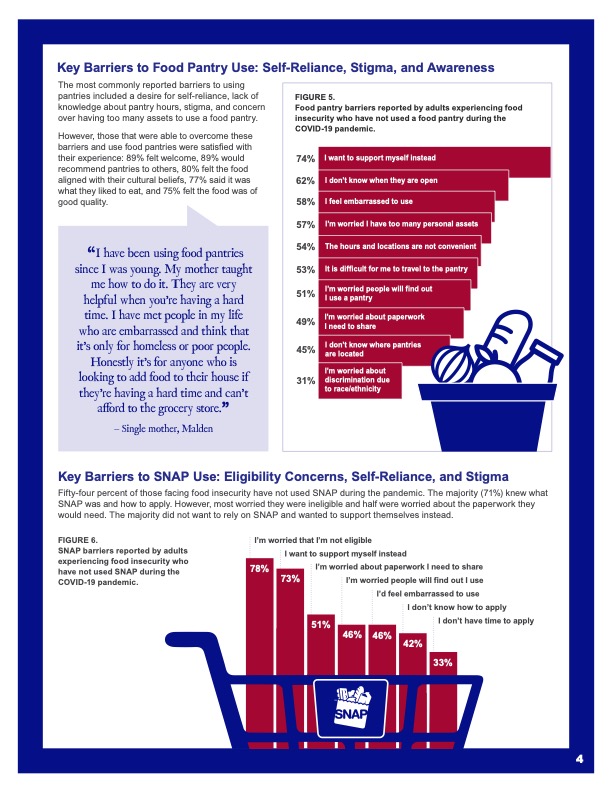
In 2021, Boston's Office of Food Access (OFA) was looking for new ways to address the ongoing public health emergency. Recent research reported that COVID-19 increased food insecurity rates by 55% in Massachusetts and affected 30% of adults, with disproportionate impacts on households with children and people of color. Only a 1/3rd of these adults were using food pantries, and only 1/2 were enrolled in SNAP benefits.
GOAL
A chatbot, or an automated SMS messaging service, could reduce food disparities by connecting residents to such resources.
Compared to emails and phone calls (which use a lot of staff capacity) and a website (which is one-size-fits-all) the chatbot’s simple interface can be personalized to the resident while lessening social stigmas. It may reach more people who are busy, don’t have Internet access, or are unfamiliar with technology. Morever, OFA had successfully launched SMS-based food deliveries in 2020 and wanted to test additional use cases.
Approach
PRODUCT MANAGEMENT
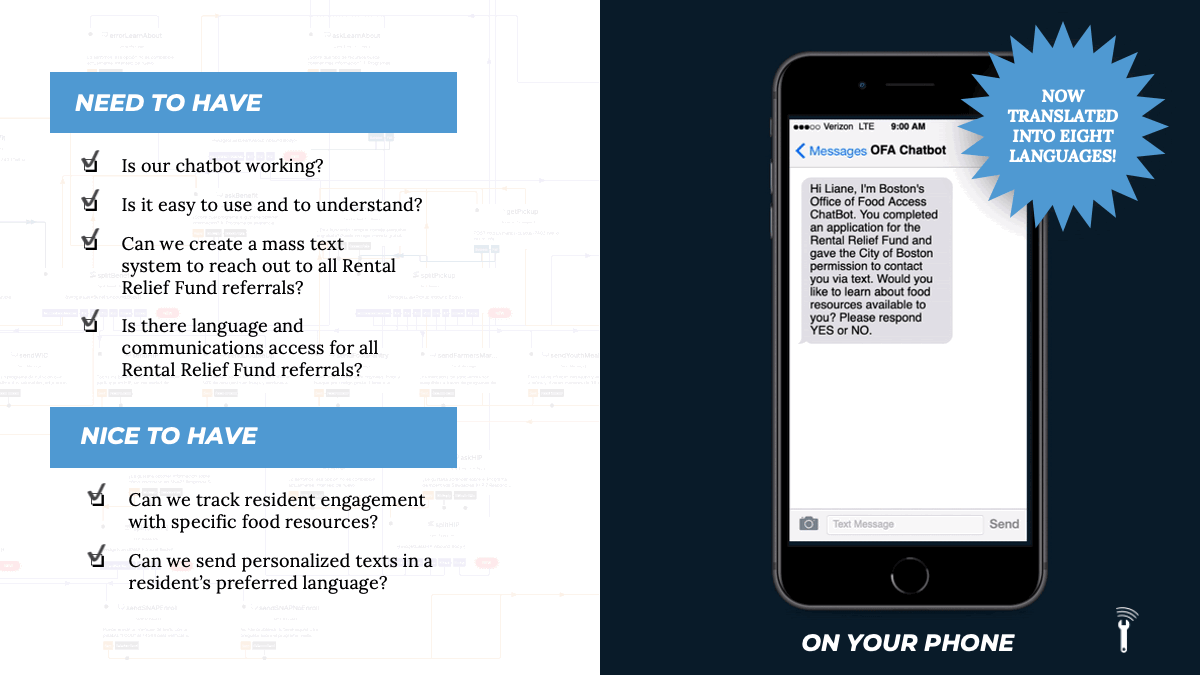
Within the 8-week timeline, I delivered a working, multilingual chatbot that could contact a pilot group of ~350 housing assistance recipients and track their program and enrollment interest. I wrote the project plan, user stories, product documentation, and resulting policy memo. All deliverables were prioritized and reviewed with a larger team.
PROTOTYPING
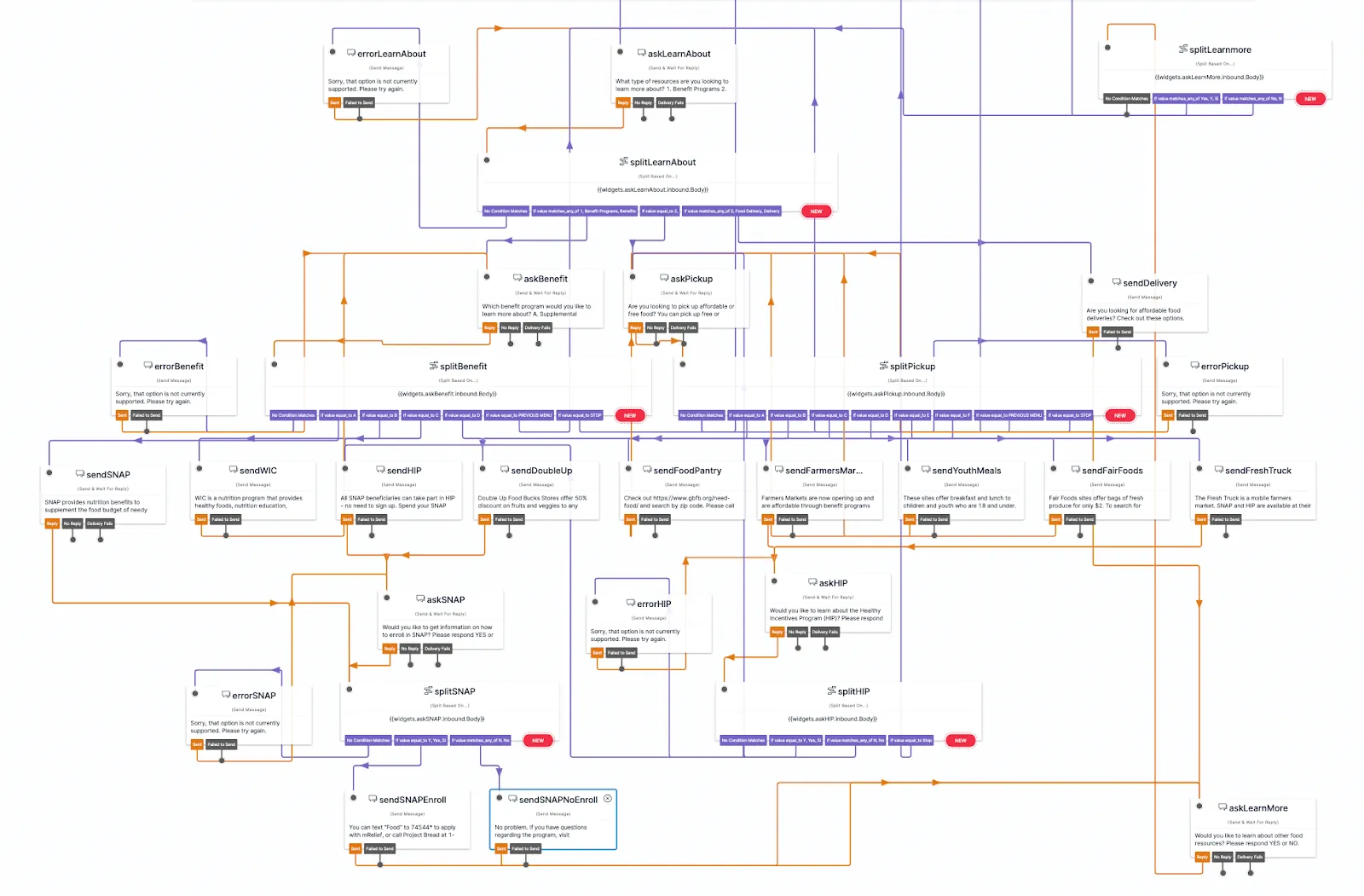
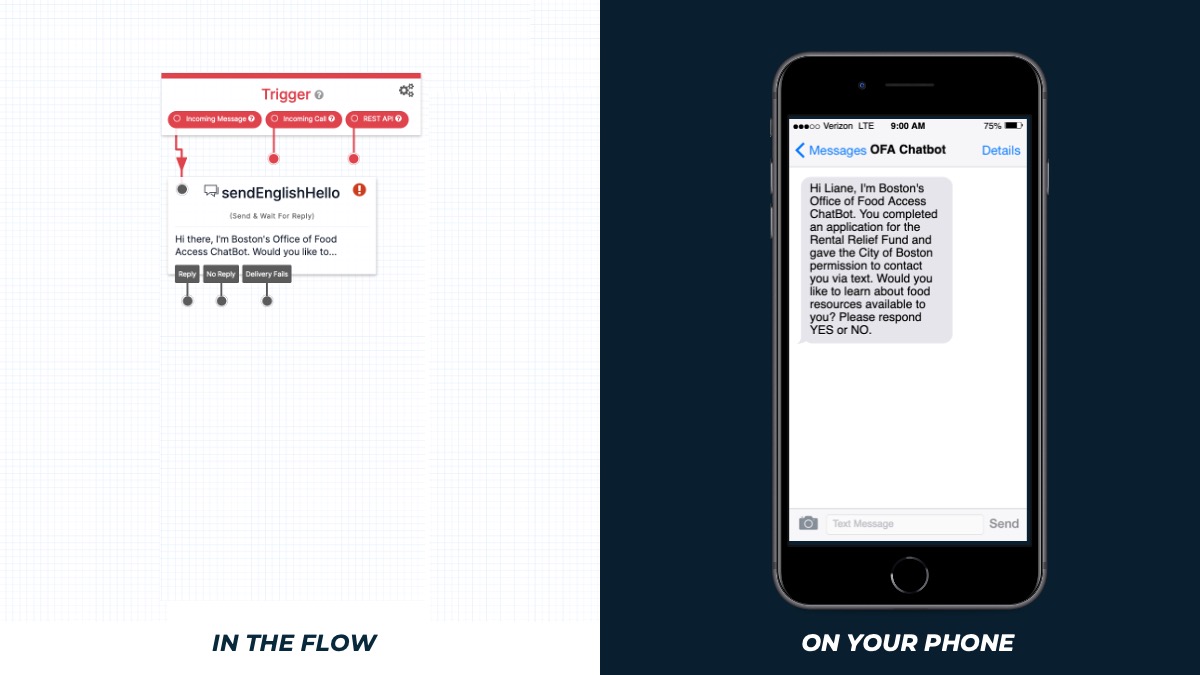
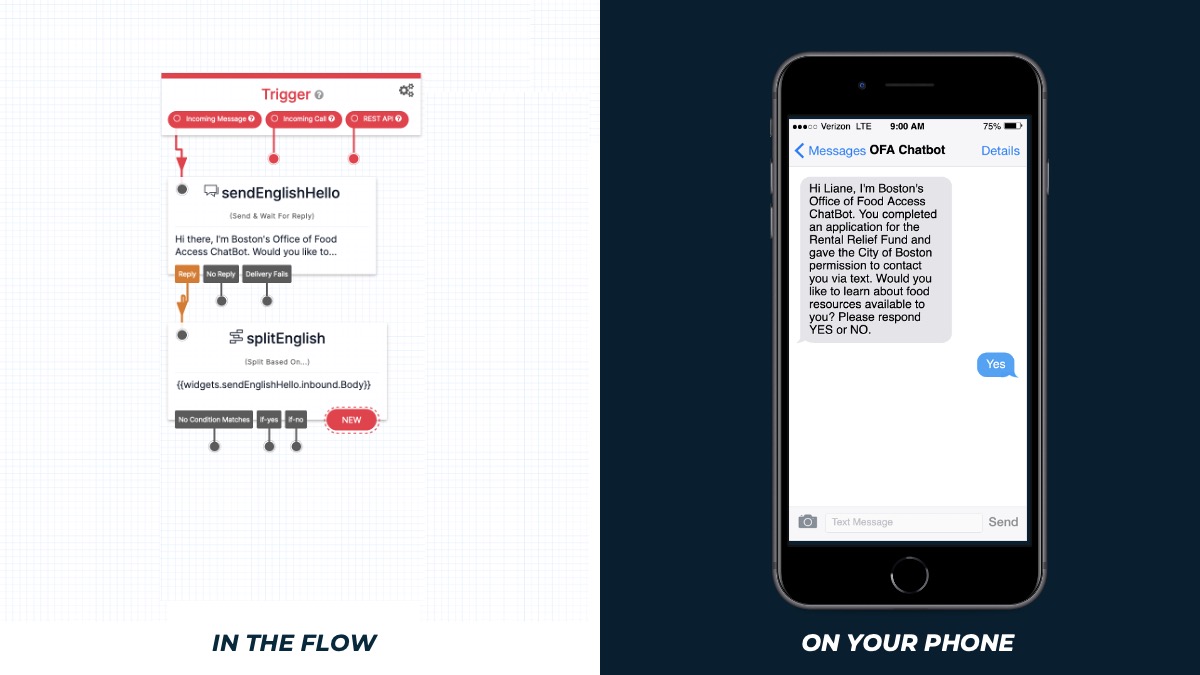
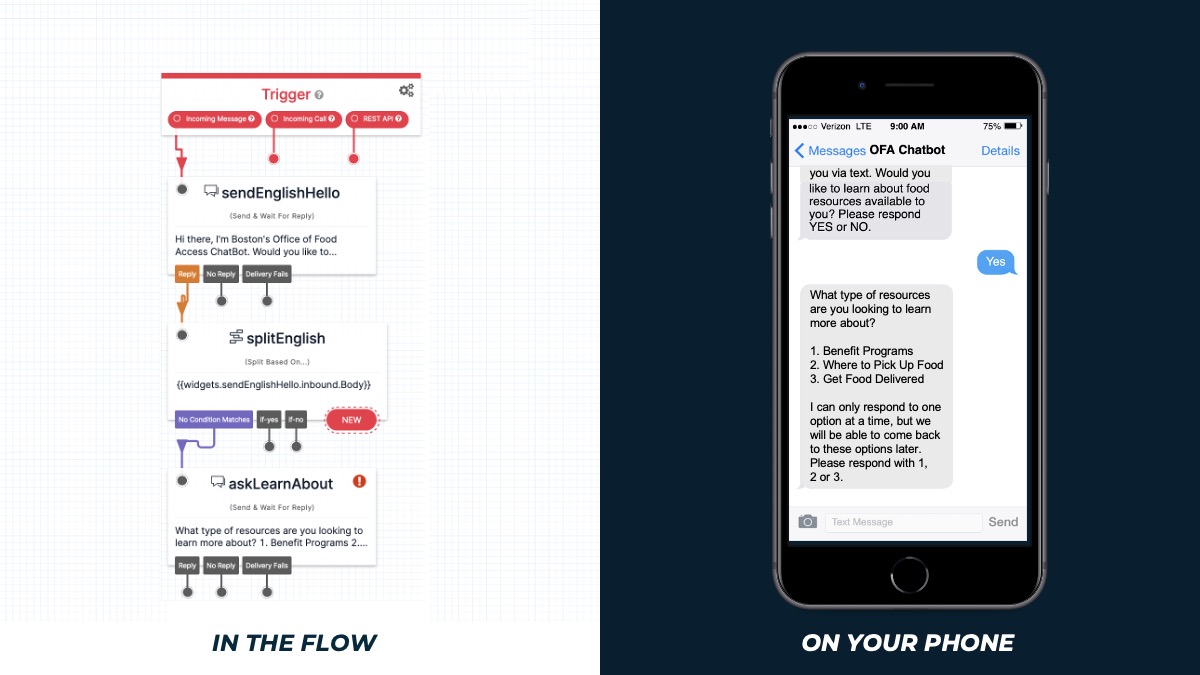
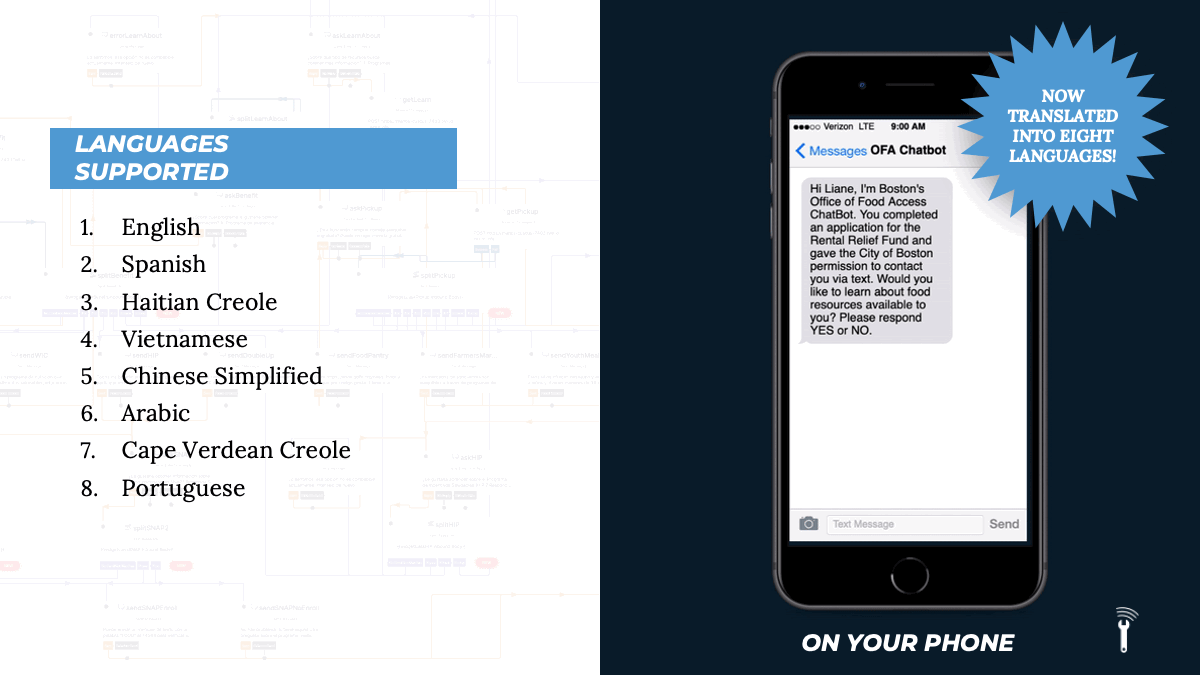
For the initial implementation, city food resources were compiled into a flowchart diagram based on eligibility criteria. I programmed the flow into Twilio, then configured Python and the Twilio CLI to send test SMS messages. In later iterations, we used scripting to send mass messages with Google Sheets, translate flows into 8 different languages, and log responses in Airtable.
CONTENT DESIGN
I refined the chatbot's script over several rounds of interviews to be as clear and engaging as possible for residents. This required overcoming information overload and confusion around programs with multiple nicknames. I used plain language, chunking, and varied formatting to aid scanning and cognitive processing. I also used fall back messages, clear navigation, and a colloquial tone to smooth over potential frustrations.
USER RESEARCH
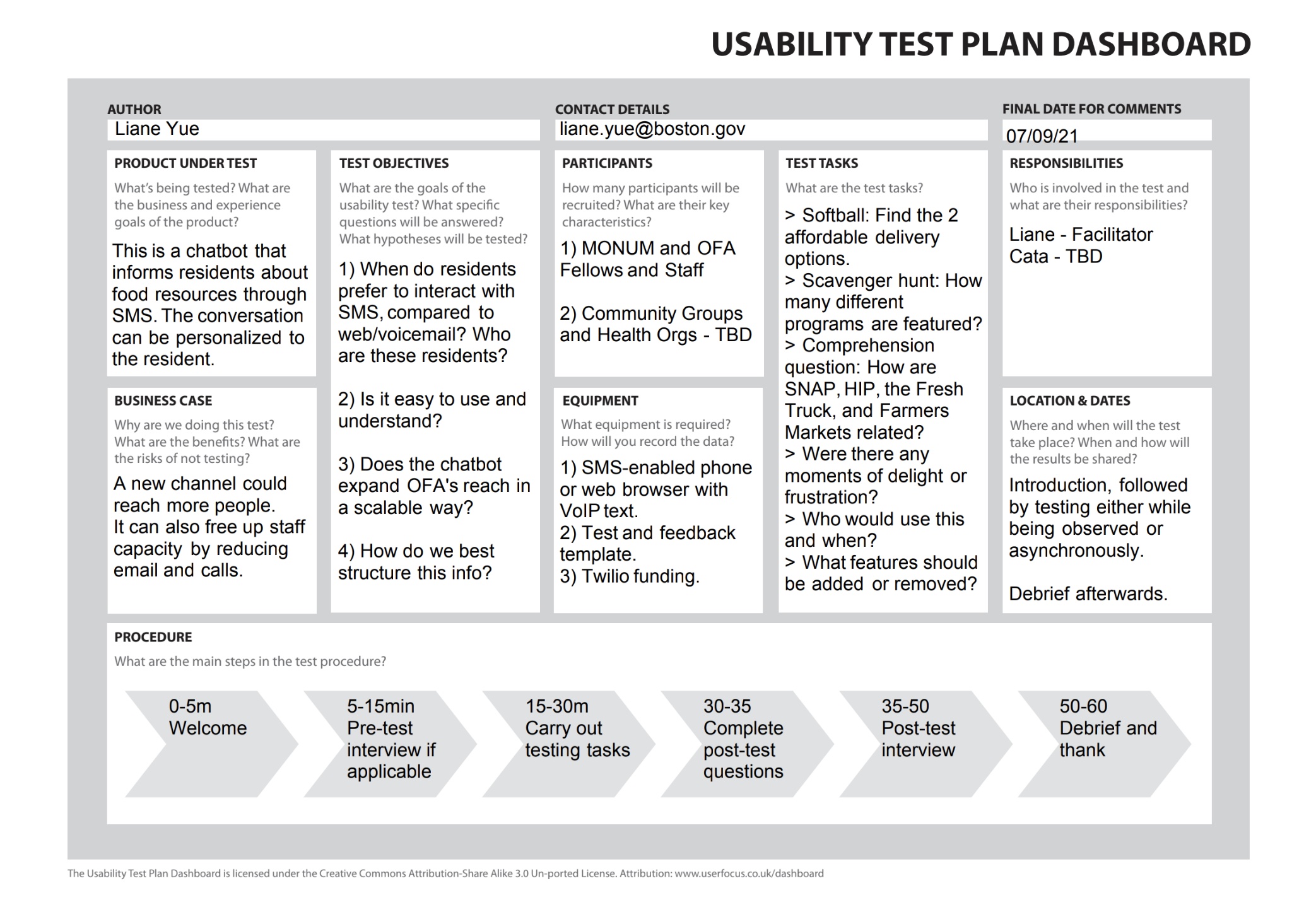
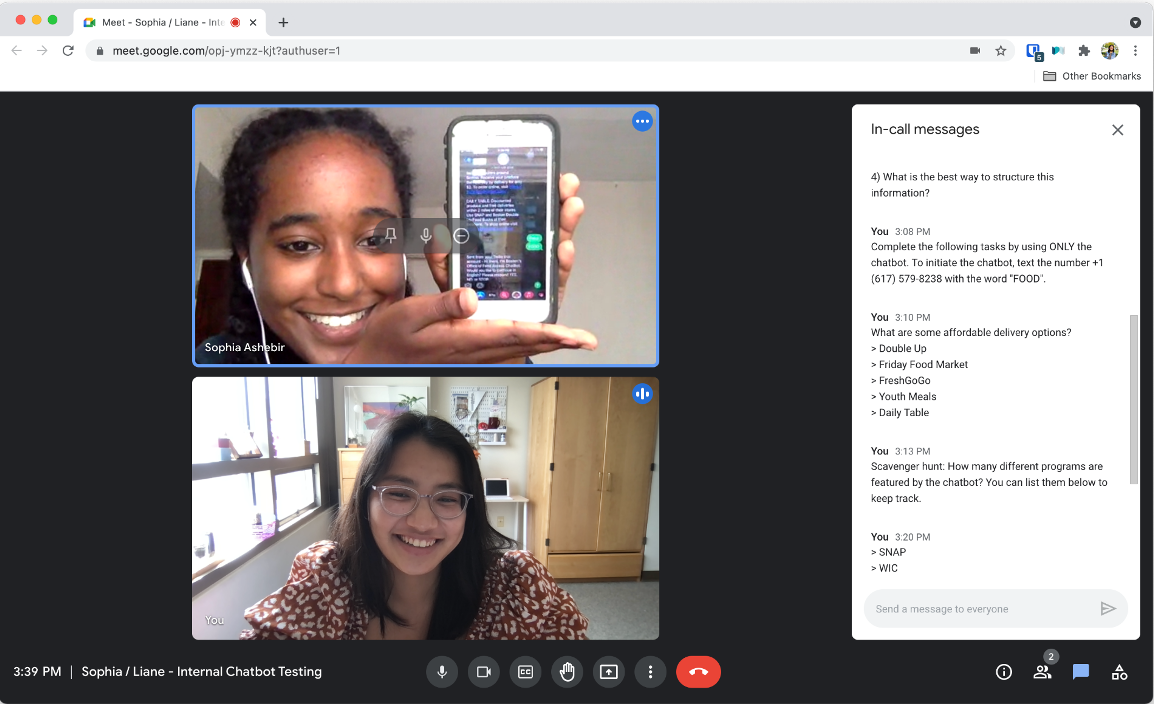
Given the timeline, I conducted 2 rounds of rapid usability tests with both English and Spanish speakers - first interviewing City of Boston staff, then community partners.
Response
“I had a constituent who came into City Hall who was asking about how to apply for food stamps... this is a nice way to get the lay of the land in a safe way. You can see everything before you prior to making a call so you have the information you need.”
PROGRAM DIRECTOR
“This is exciting… because of all of the possibilities that are there for people will be there in a tangible way.”
FOOD SPECIALIST
“I think it achieves exactly the goal that you mentioned, that thing that really stood out to me. Freeing up staff capacity - typically people.”
COMMUNITY ENGAGEMENT COORDINATOR
Press